A painful nail edge
Tenderness, redness, warmth, or swelling where a nail presses into the surrounding skin.
 Ashleigh E. Korves, DPMFoot & Ankle CareESCall707-575-6033
Nail, fungal, wart & skin conditions
A sore nail edge, a thickened nail, or a recurring area of skin can have more than one cause. An evaluation begins by identifying what has changed before choosing how to treat it.
What may be happening
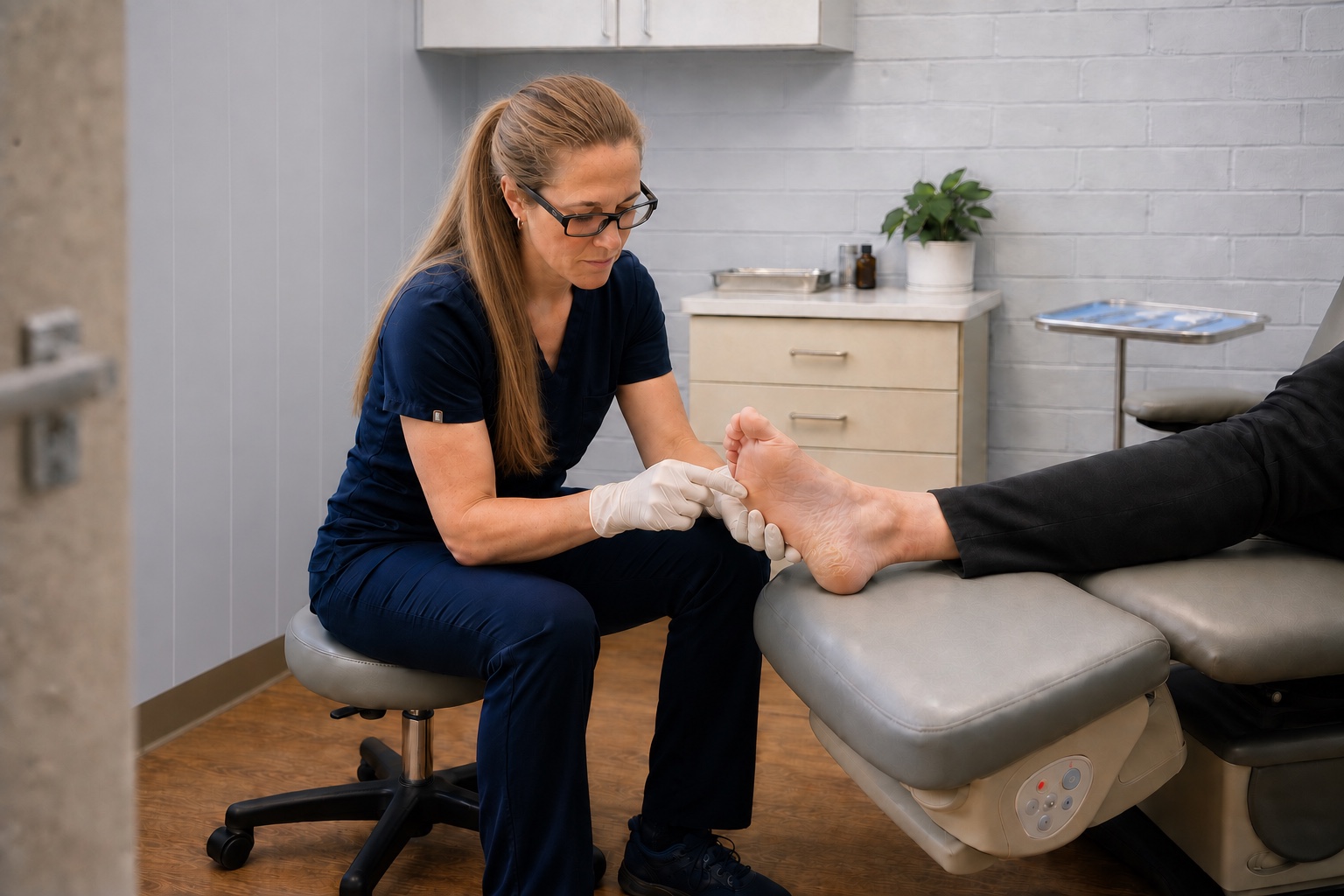
A painful nail border, nail thickening or discoloration, a rough growth, or a recurring patch of skin can come from different causes. Appearance alone may not distinguish an ingrown nail from irritation, a fungal change from nail injury, or a wart from an area of built-up pressure.
The history and examination help narrow the possibilities. Dr. Korves may look at the location, texture, surrounding skin, footwear pressure, and how the concern has changed. That context matters before an office treatment or home-care plan is chosen.
What you may notice
A painful nail edge, persistent thickening or discoloration, a recurring skin change, or an area that is difficult to manage at home. The timing and location of symptoms are often as useful as the intensity.
Tenderness, redness, warmth, or swelling where a nail presses into the surrounding skin.
Persistent thickening, discoloration, brittleness, lifting, or a change that does not grow out normally.
A rough, tender, or pressure-sensitive area that returns after filing, padding, or other self-care.
Cracking, scaling, itching, irritation, or another change that spreads, recurs, or interferes with shoes.
How Dr. Korves may help
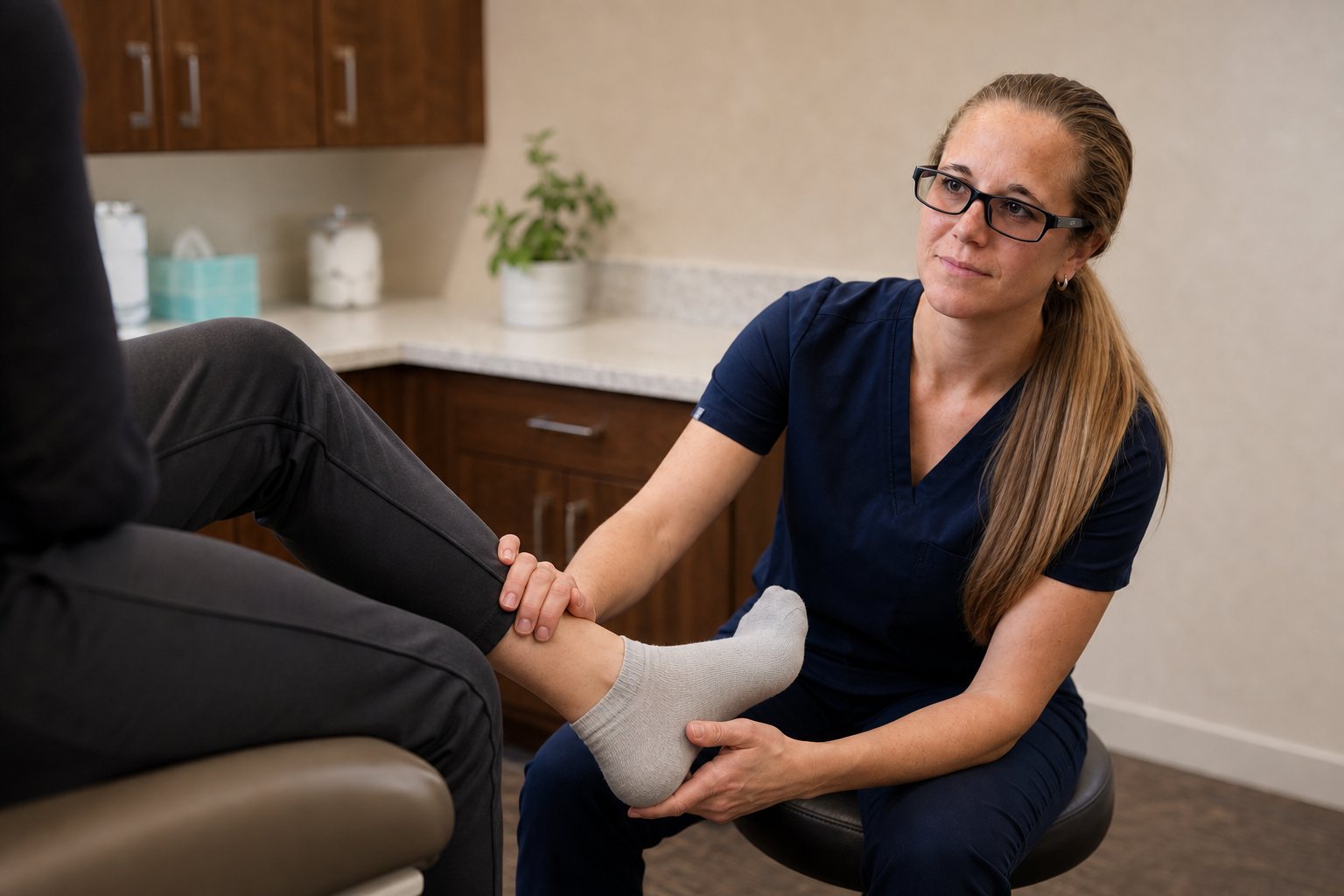
The visit begins with when the change appeared, whether it hurts, how it has progressed, and what has already been tried. Footwear, activity, moisture, repetitive pressure, injury, and exposure history may all be relevant.
Dr. Korves may examine the nail or skin and the tissue around it, then consider circulation, sensation, diabetes, medication, and other factors that may affect healing. If the diagnosis remains uncertain, she can explain whether observation, testing, or another clinical opinion is appropriate.
Treatment possibilities
The goal is not simply to change how the area looks. A plan should address the source of pain or irritation while respecting circulation, sensation, healing, and the likelihood of recurrence.
Footwear changes, padding, protection, or careful reduction of built-up skin may be considered when pressure contributes.
Home care, prescription treatment, or an office-based option may be discussed after the concern is identified.
A painful or treated area may need cleansing guidance, a dressing, pressure relief, and clear signs to monitor.
Recurring or slow-changing concerns may need reassessment to confirm the diagnosis and response to treatment.
Advanced options, when appropriate
Depending on the examination, Dr. Korves may discuss a nail procedure, diagnostic sampling, biopsy, infection care, or coordination with another clinician. These are possibilities rather than routine next steps, and the appropriate choice depends on the diagnosis and individual risk factors.
Talk with the office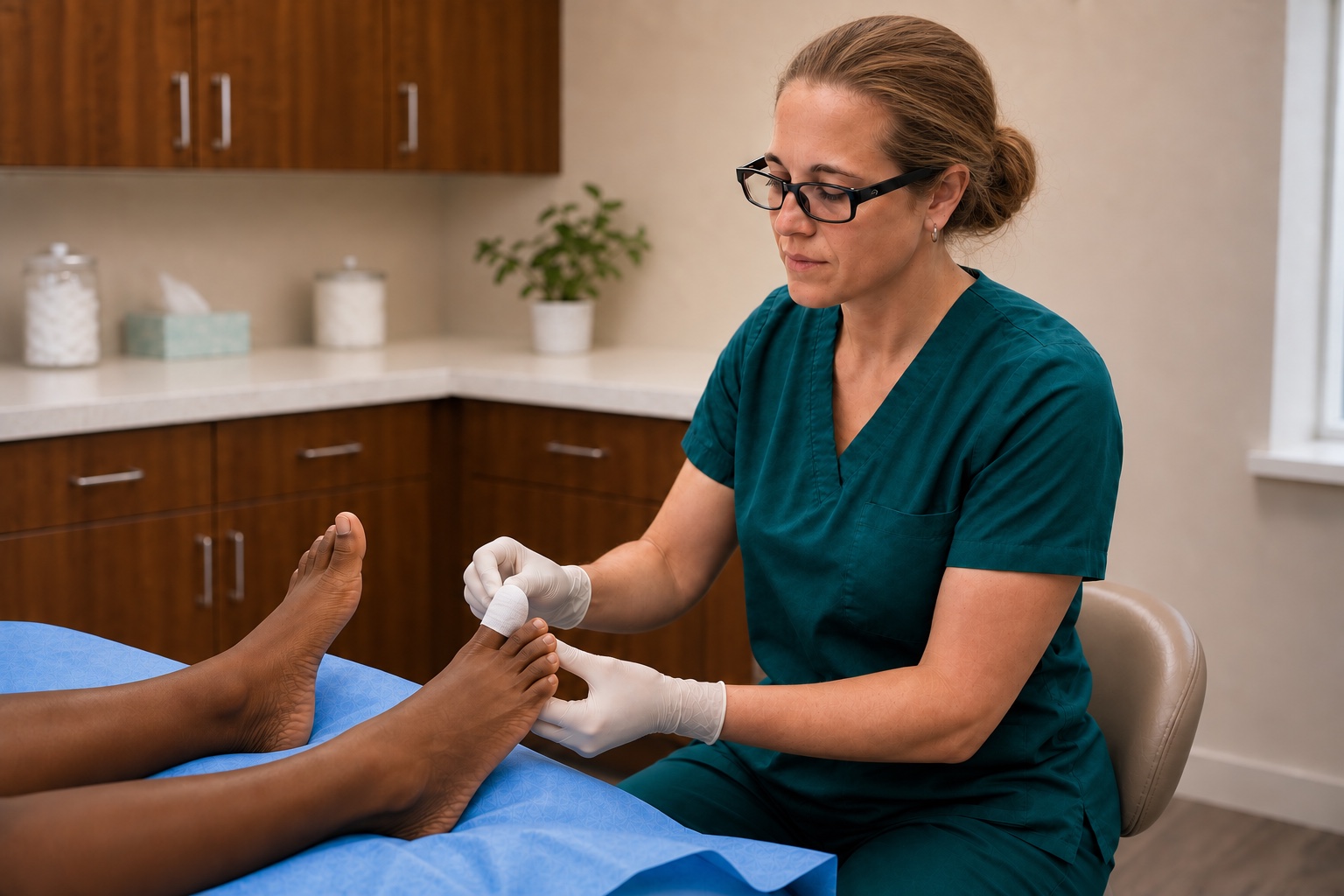
When to be seen
Contact a medical professional promptly for drainage, spreading redness or warmth, increasing swelling, fever, or feeling unwell.
Any open or possibly infected area deserves prompt attention when diabetes, neuropathy, poor circulation, or impaired healing is present.
For your appointment
What appears to be causing this change?
Should the diagnosis be confirmed before treatment?
What can I safely do at home?
How can I reduce the chance that it returns?
Start with the change
Tell the office what has changed, how long it has been present, and whether it is painful or spreading. A focused evaluation can help clarify the next step.