A break in the skin
A blister, crack, sore, ulcer, cut, or other open area that is new, persistent, or repeatedly returns.
 Ashleigh E. Korves, DPMFoot & Ankle CareESCall707-575-6033
Wound & higher-risk foot care
An open area, drainage, redness, swelling, or a change you cannot feel clearly may become more significant when circulation, sensation, diabetes, or healing is a concern.
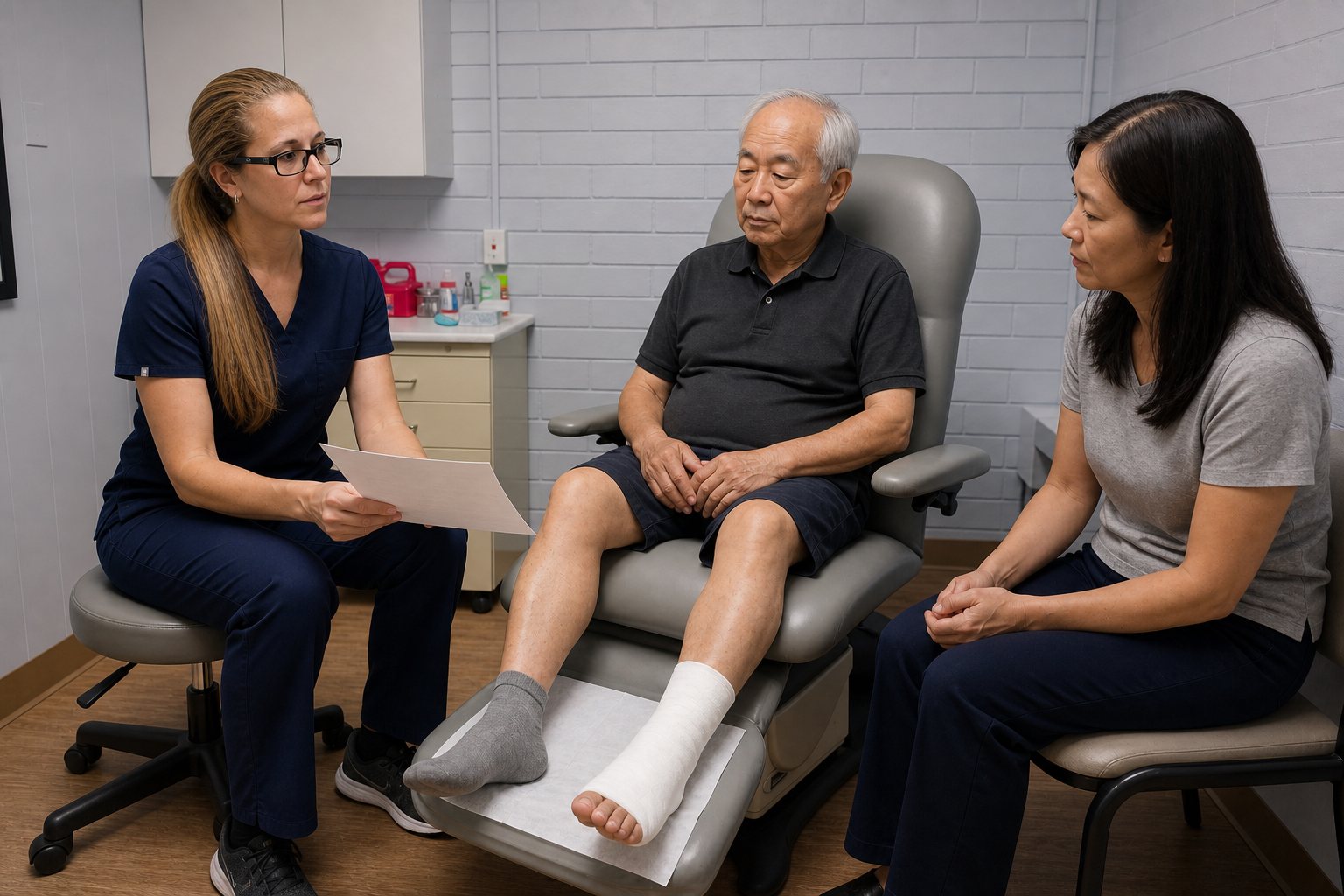
What to watch
A break in the skin, drainage, odor, redness, warmth, swelling, or callus over a pressure area can signal a wound that needs attention. Reduced sensation may make a serious concern less painful than expected, so regular foot checks are important when diabetes, neuropathy, or circulation problems are present.
Evaluation looks at the wound and the factors around healing. Depth, location, pressure, infection signs, blood flow, sensation, footwear, mobility, glucose management, and other health conditions may all affect the plan and whether care should be coordinated with another clinician.
What you may notice
A wound, skin breakdown, diabetes-related foot concern, or another change that deserves careful attention. The timing and location of symptoms are often as useful as the intensity.
A blister, crack, sore, ulcer, cut, or other open area that is new, persistent, or repeatedly returns.
Fluid, staining on a sock or dressing, or a new odor from an area of skin breakdown.
Increasing warmth, redness, swelling, discoloration, or tissue that looks different from the surrounding foot.
Callus, pressure, injury, or an open area discovered during a foot check despite little or no pain.
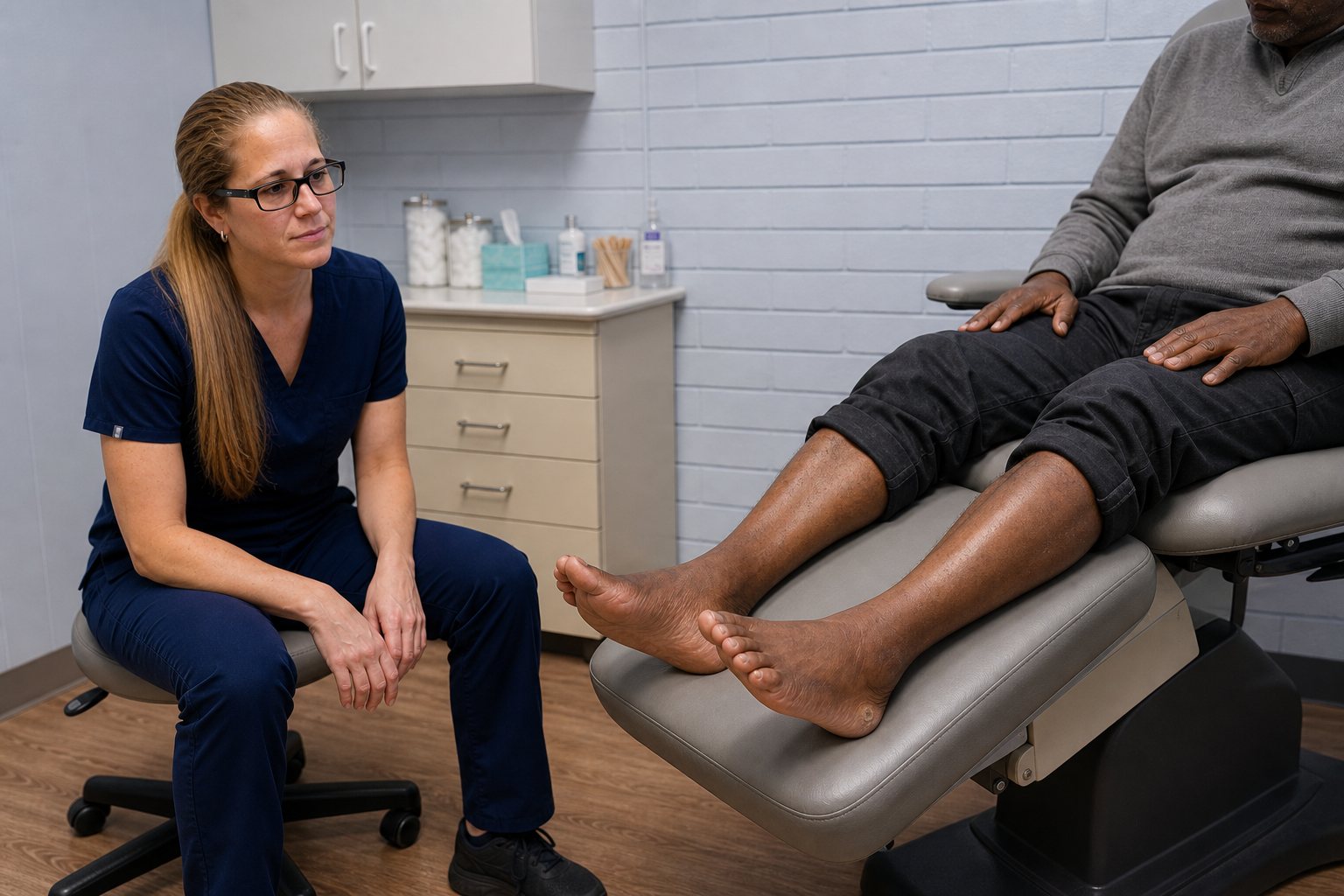
How Dr. Korves may help
The visit considers when the area appeared, how it changed, drainage, current care, pressure, footwear, and whether the patient can reliably feel and inspect the foot. Diabetes history, circulation, medicines, infection symptoms, and prior wounds provide essential context.
Dr. Korves may assess the skin and wound, pressure, sensation, circulation, and signs that another test or clinician is needed. The immediate plan should protect the area and address factors that may delay healing or increase risk.
Treatment framework
Care depends on the wound, its cause, depth, pressure, circulation, sensation, infection risk, and the patient’s broader health. Follow-up and coordination may be as important as the first treatment.
Document the location and appearance, then identify signs that testing, imaging, or more urgent care may be needed.
Footwear, padding, offloading, activity changes, or another protection strategy may help limit repeated stress.
Cleansing, dressing, skin protection, and monitoring instructions should fit the wound and the person managing care.
Follow-up or referral may address infection, circulation, diabetes, mobility, or another factor affecting healing.
Advanced options, when appropriate
Depending on the wound and the patient’s health, evaluation may lead to imaging, infection treatment, vascular assessment, procedural care, surgery, or coordination with another service. Dr. Korves must confirm the specific services and referral boundaries before publication.
Call the office promptly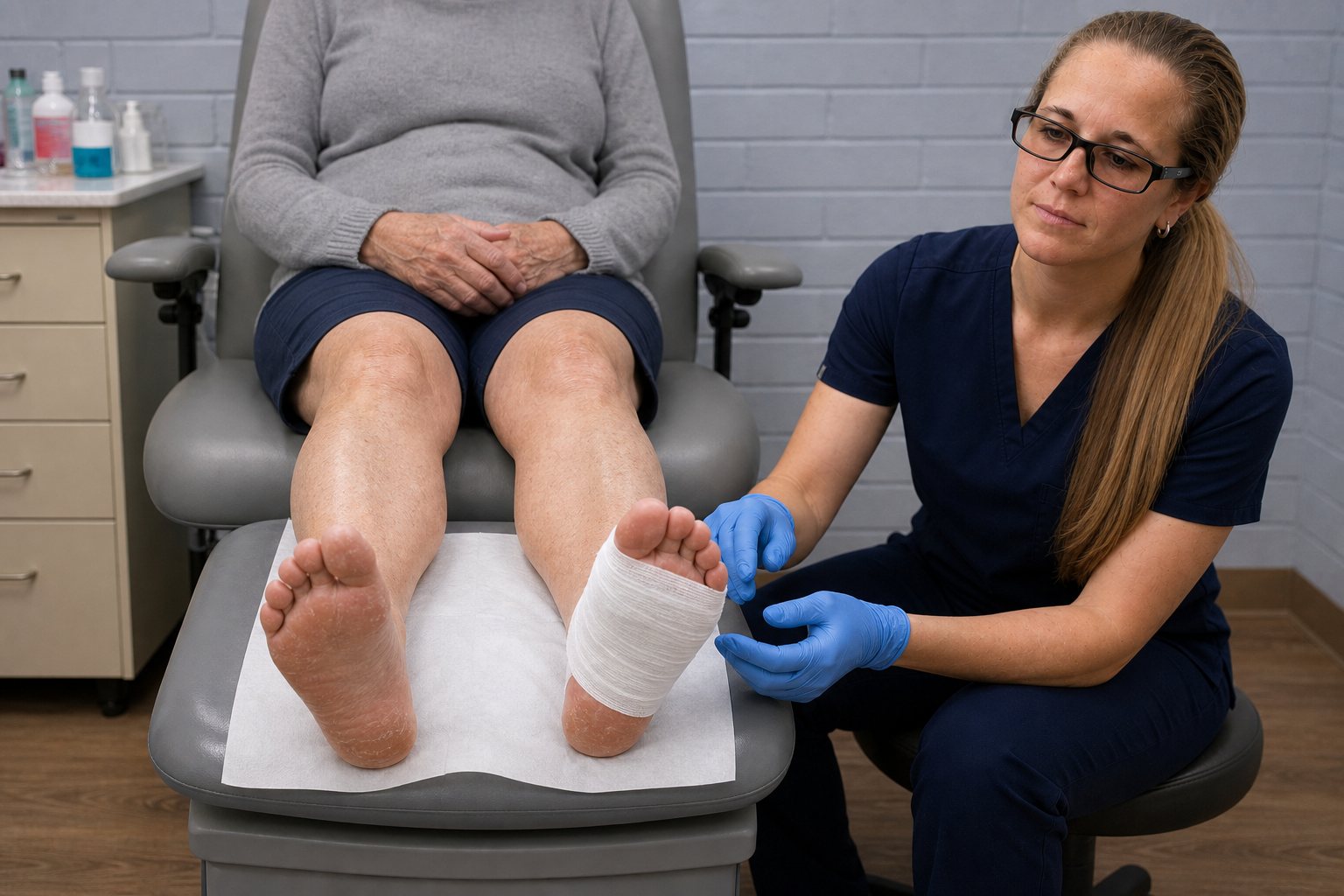
When to be seen
Seek prompt medical guidance for spreading redness or warmth, increasing swelling, drainage, odor, fever, illness, discoloration, or rapidly worsening tissue.
An open wound with diabetes, neuropathy, poor circulation, or impaired healing deserves timely professional assessment. Use emergency services for a true emergency.
For your appointment
What may be slowing healing?
How should pressure be reduced?
What should be done between visits?
Which changes require immediate help?
Early attention matters
Call the office about an open area, drainage, redness, swelling, or a change you cannot feel clearly. The office can help determine the appropriate next step.