Pain affects the day
Discomfort changes walking, standing, work, sleep, exercise, or the activities that matter to you.
 Ashleigh E. Korves, DPMFoot & Ankle CareESCall707-575-6033
Conservative & non-surgical treatment
Conservative care is not one treatment and it is not a lesser plan. It is a diagnosis-led combination of practical options chosen around your symptoms, activity, health, and goals.
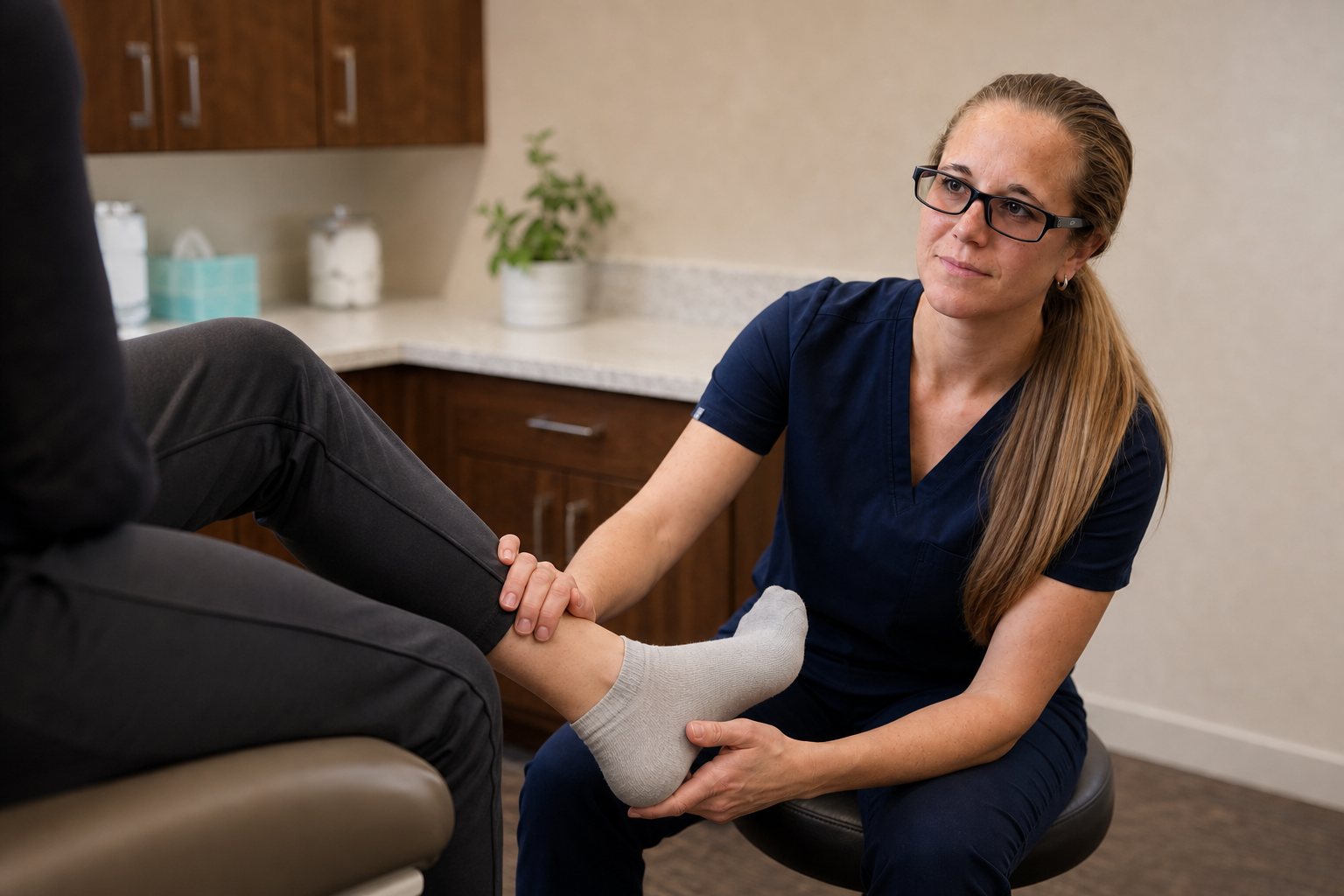
What conservative care means
Conservative care can include activity changes, footwear guidance, support, rehabilitation, medication guidance, temporary immobilization, and selected office-based treatments. It is not a universal checklist. Each option should answer a particular need identified through the evaluation.
A useful plan also reflects the life around the foot or ankle problem: work, caregiving, exercise, health conditions, footwear, and what you need to return to. Progress is reassessed so the plan can continue, change, or lead to a different conversation.
What you may notice
A desire to understand practical options before considering a procedure or surgery. The timing and location of symptoms are often as useful as the intensity.
Discomfort changes walking, standing, work, sleep, exercise, or the activities that matter to you.
You repeatedly stop and restart movement because symptoms return when demand increases.
Shoes, inserts, braces, or home exercises have not helped clearly or have created new discomfort.
You want to understand practical steps before considering a procedure or surgery.
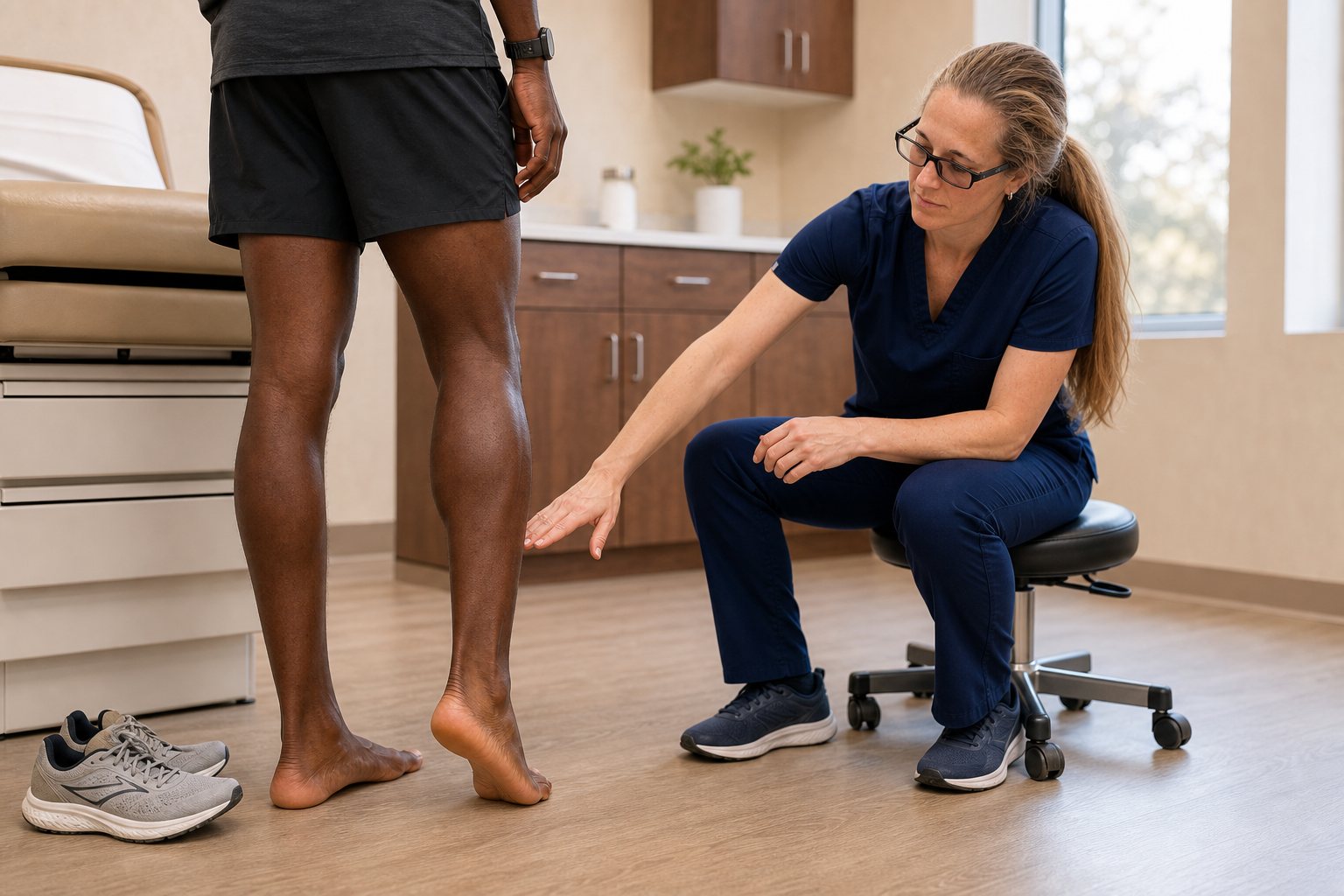
How Dr. Korves may help
The visit connects the symptom pattern to structure, motion, strength, load, footwear, health, and prior treatment. A clear working diagnosis gives each conservative option a reason to be in the plan.
Dr. Korves may also discuss what can continue safely, what should change temporarily, and how the response will be judged. The aim is an understandable plan with a defined purpose, not an indefinite collection of treatments.
Treatment possibilities
A plan may combine a few complementary steps. Each should have a clear role, a realistic way to use it, and a point at which the response is reviewed.
Adjusting impact, time on your feet, training, or recovery may reduce repeated stress while maintaining useful movement.
Footwear, padding, taping, braces, or over-the-counter or custom devices may be chosen for a specific purpose.
Stretching, strengthening, mobility work, rehabilitation, or physical therapy may address identified limitations.
Follow-up can clarify whether the diagnosis and plan still fit, or whether another step deserves consideration.
Advanced options, when appropriate
If progress is limited, Dr. Korves may revisit the diagnosis, adherence, load, and goals. Selected injections, ESWT, further imaging, or a surgical consultation may be discussed when the findings support them, but none is a universal next step.
Learn about ESWT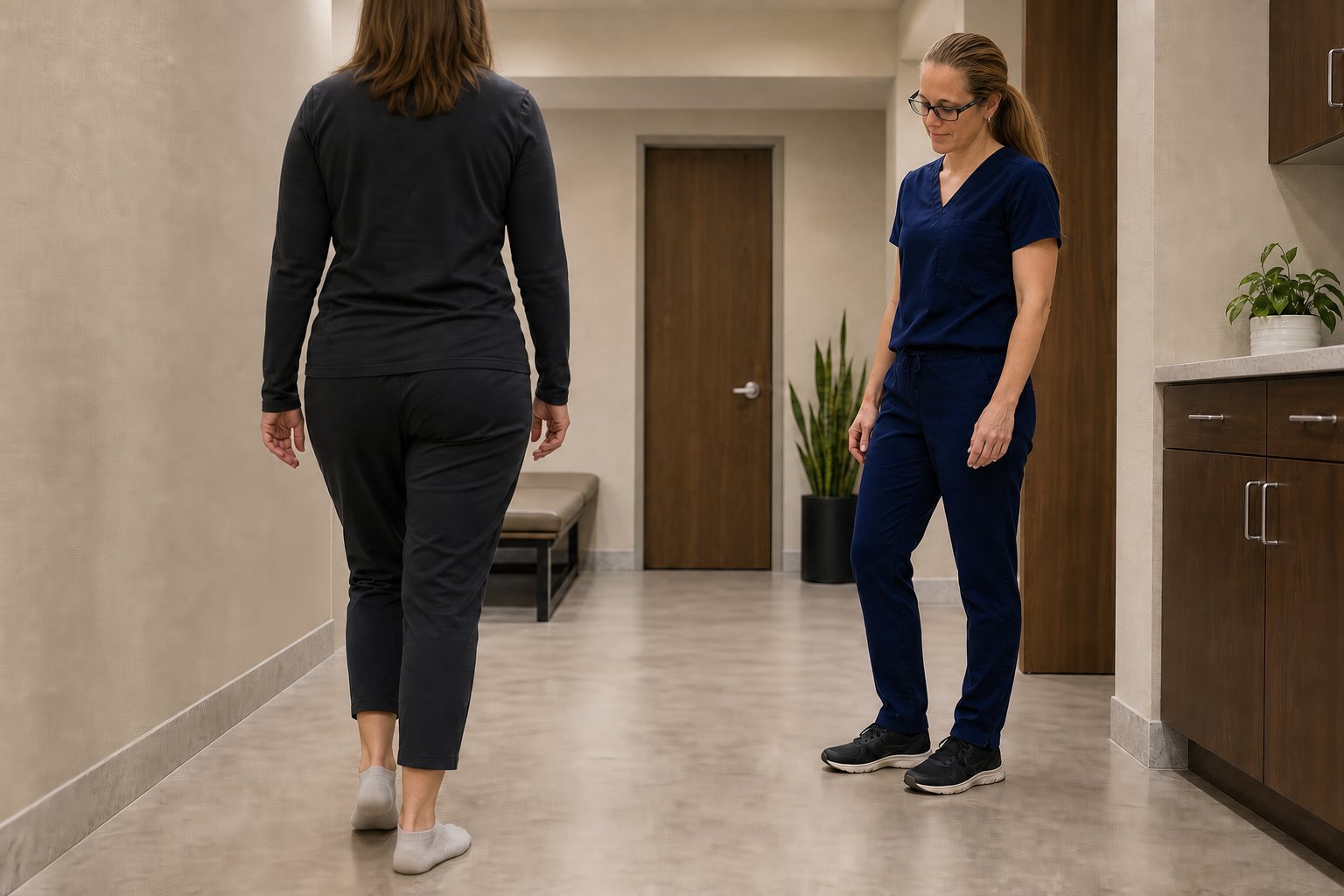
When to be seen
Seek prompt care for a significant injury, visible deformity, inability to bear weight, or a new circulation or sensation change.
Spreading infection signs or an open wound in a higher-risk foot should not wait for a routine conservative-care appointment.
For your appointment
What is the working diagnosis?
Which option has the clearest purpose?
What can I continue doing?
When should we change the plan?
A practical next step
Tell the office how symptoms affect your day and what you have already tried. Dr. Korves can help connect the diagnosis to conservative options that make sense.