Pain keeps returning
A clinically evaluated area remains painful or repeatedly flares despite time and an initial care plan.
 Ashleigh E. Korves, DPMFoot & Ankle CareESCall707-575-6033
Extracorporeal shockwave therapy
ESWT uses acoustic energy through the skin to treat a painful area without an incision. For selected persistent foot and ankle problems, it may offer a next step when time and initial care have not been enough. Dr. Korves can help you decide whether it fits your condition and movement goals.
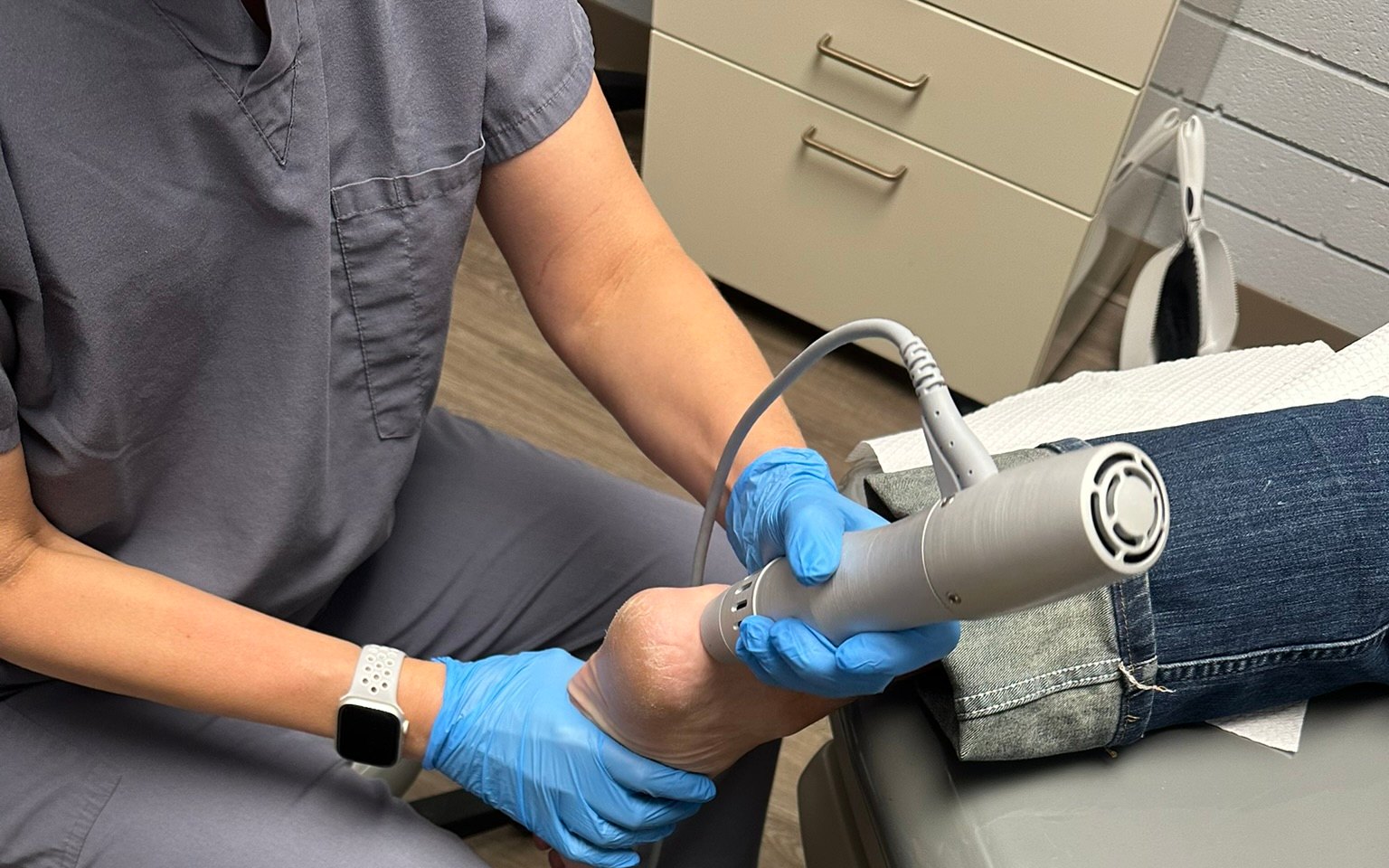
Understanding ESWT
Extracorporeal means that treatment is delivered from outside the body. During ESWT, a device passes acoustic energy through the skin to a targeted area. It is not electrical stimulation and it does not involve an incision. Devices, energy delivery, treatment courses, evidence, and expected sensations can vary.
The diagnosis and patient selection matter as much as the technology. Dr. Korves first considers the condition, how it responds to activity, what care has already been tried, and the health factors that may affect treatment. ESWT is one possible part of a plan, not a universal next step or a promise of relief.
See ESWT in action
This short patient video from Zimmer MedizinSysteme shows how shockwave treatment is delivered with a handpiece and what an in-office session can look like. Your experience and treatment plan may differ.
Watch on VimeoWhat you may notice
Persistent heel, tendon, or other musculoskeletal pain that has not settled with time or initial conservative care. The timing and location of symptoms are often as useful as the intensity.
A clinically evaluated area remains painful or repeatedly flares despite time and an initial care plan.
Walking, work, exercise, or another meaningful activity remains difficult because the area does not tolerate demand.
An appropriate first plan has not created the expected change, so the diagnosis and next steps are being reconsidered.
You want a balanced discussion of ESWT, reasonable alternatives, uncertainty, and how progress would be reviewed.
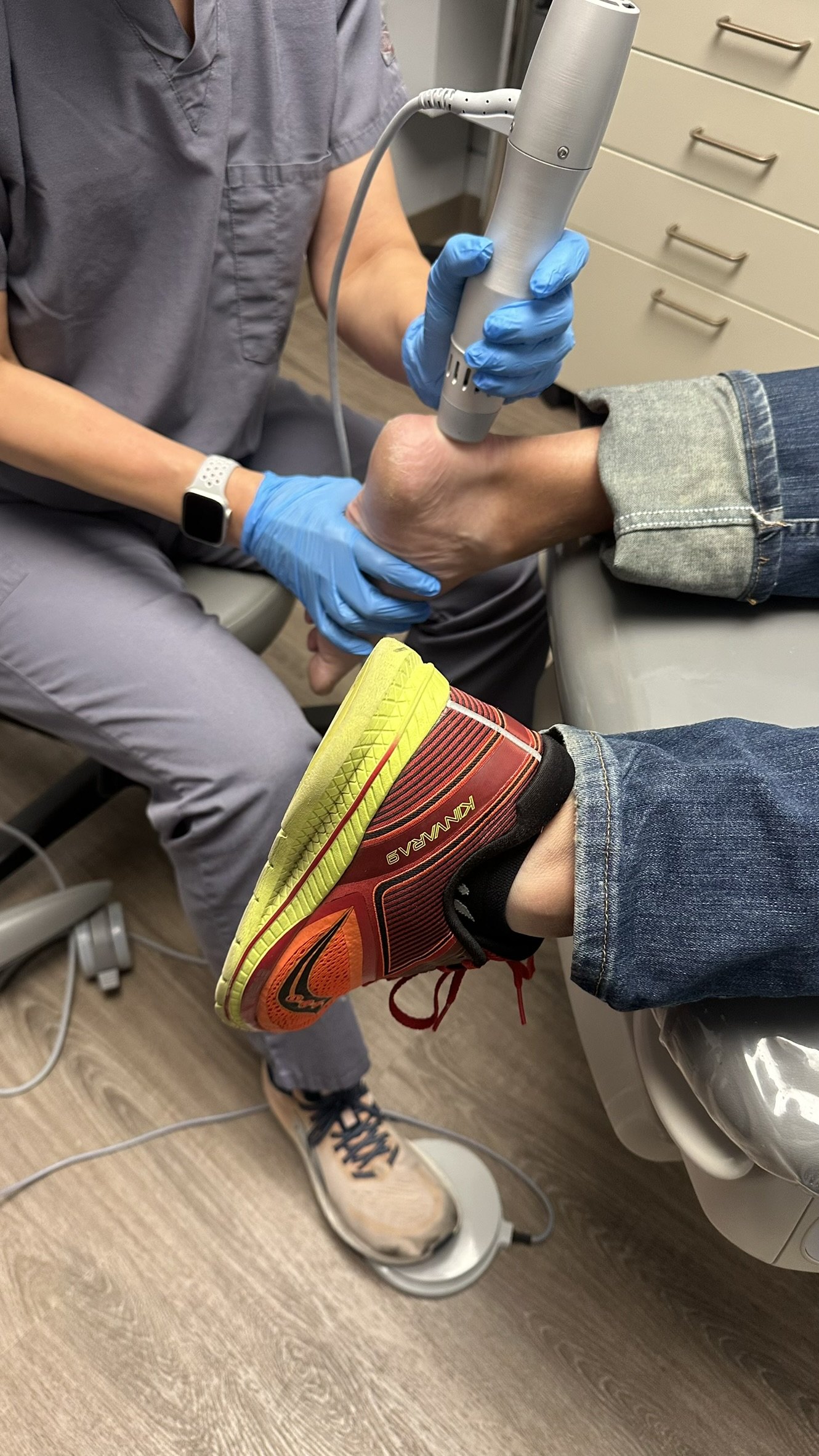
How Dr. Korves may help
You do not need to know the diagnosis or decide on ESWT before you come in. Dr. Korves starts with your symptoms, the activities they interrupt, and what you have already tried. The examination helps her understand whether the painful tissue is the kind of problem ESWT may help.
If it may be appropriate, she will explain what treatment can feel like, how the handpiece is used, and how ESWT could work alongside rehabilitation, footwear, activity changes, or other care. You can ask questions and decide with a clearer picture of the possible benefits, limitations, and next steps.
What treatment can look like
ESWT is an in-office treatment centered on helping a persistent problem tolerate movement more comfortably. Your plan can combine the treatment itself with practical guidance on activity and rehabilitation, then use follow-up to see whether it is helping.
Treatment sensation can vary. Dr. Korves can check in with you and adjust the session within the treatment plan.
The handpiece is positioned over the selected area and moved or held in place as acoustic pulses are delivered.
Activity guidance, footwear, support, or rehabilitation may remain part of the plan so ESWT is not expected to do every job alone.
Follow-up focuses on what matters to you, such as walking, work, exercise, and confidence in movement.
Keeping your options open
If ESWT is not the strongest fit, or does not create the change you and Dr. Korves are looking for, the conversation does not end there. Rehabilitation, footwear or orthotic support, imaging, another procedure, or surgical evaluation may still provide a sensible next step based on the condition.
See other treatment options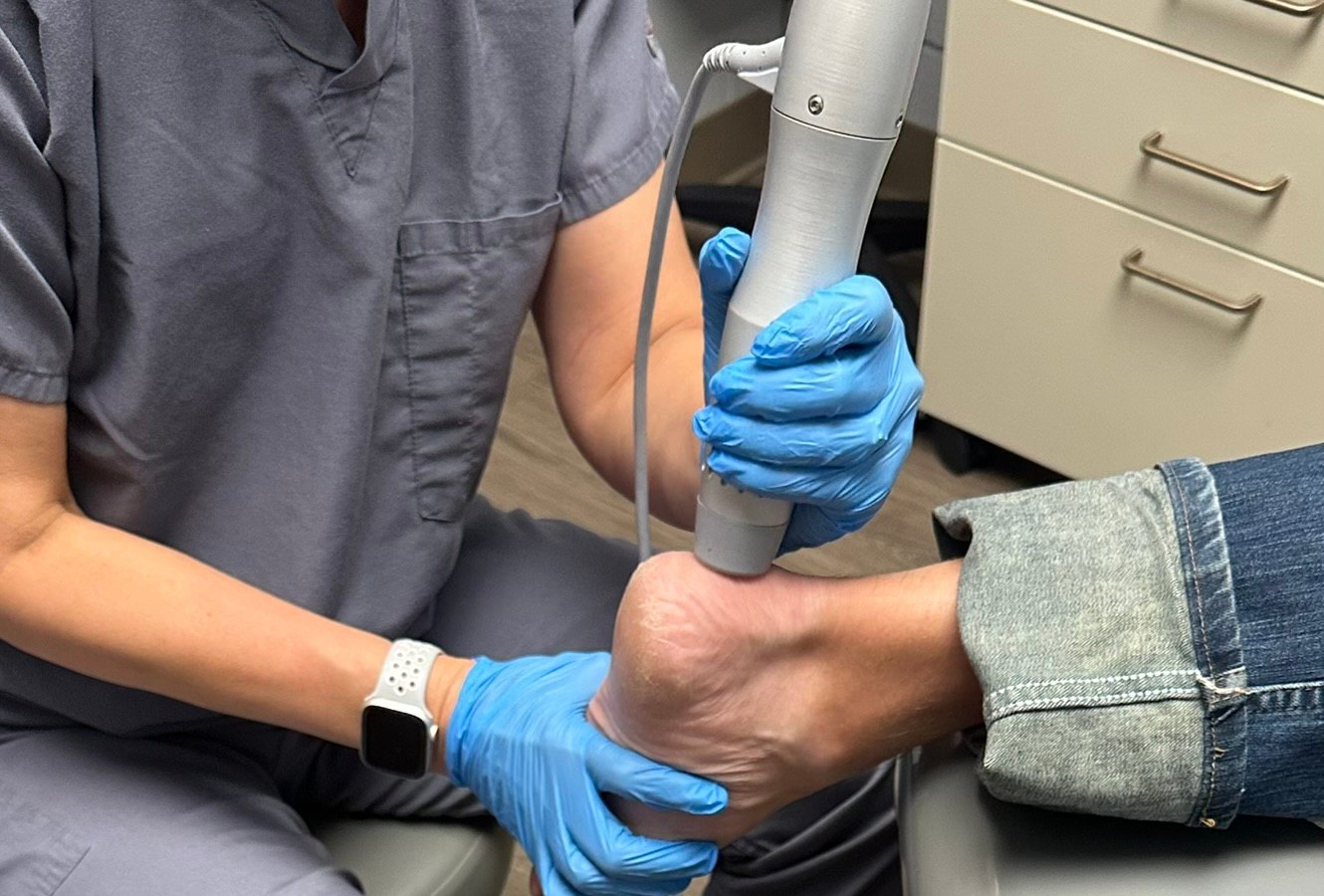
When to ask about ESWT
An acute injury, visible deformity, rapidly worsening symptoms, signs of infection, or an open wound needs timely evaluation rather than self-selecting ESWT.
New circulation or sensation changes and an inability to bear weight should be assessed promptly through an appropriate medical service.
For your appointment
What could ESWT help me get back to doing?
What does treatment usually feel like?
How could ESWT work with my current rehabilitation or activity plan?
How will we know whether it is helping?
See whether ESWT may fit
Call the office to talk about what has been limiting you and the care you have already tried. An evaluation can clarify whether ESWT belongs in your next step.