First-step pain
Sharp, tender, or aching discomfort under the heel when getting out of bed or standing after rest.
 Ashleigh E. Korves, DPMFoot & Ankle CareESCall707-575-6033
Heel & arch pain
Heel or arch pain can change the way you stand, walk, exercise, and move through the day. The first step is understanding where the pain is coming from—not assuming every sore heel has the same cause.

What may be happening
The plantar fascia is a strong band of tissue beneath the foot that connects the heel toward the toes and helps support the arch. When it becomes irritated, discomfort is often felt under the heel or through the arch—especially with the first steps after sleep or rest.
But the bottom of the heel is only one possible source. Pain at the back of the heel, pain after a sudden increase in activity, or pain that follows an injury can point toward a different problem. An evaluation helps separate these patterns before a treatment plan is chosen.
What you may notice
Pain with first steps, standing, walking, or activity—or discomfort that keeps returning. The timing and location of symptoms are often as useful as the intensity.
Sharp, tender, or aching discomfort under the heel when getting out of bed or standing after rest.
Pain that builds during a long day on your feet, returns after sitting, or changes how you walk.
Pulling, tightness, or soreness through the arch or along the bottom of the foot.
Symptoms after increasing mileage, changing workouts, returning to sport, or spending more time on hard surfaces.
How Dr. Korves may help
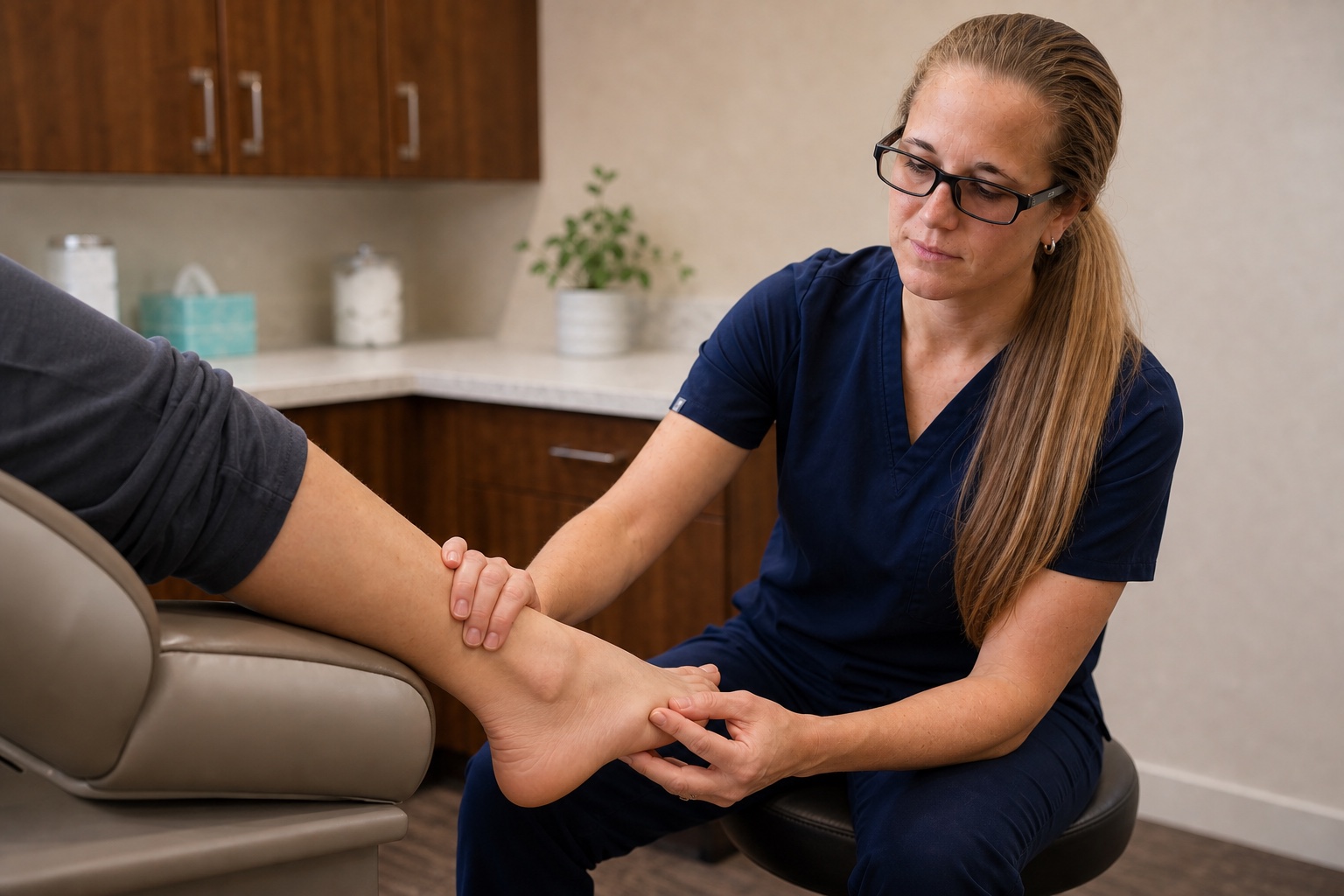
The visit begins with where the pain is located, when it is most noticeable, how it began, and what has changed in your routine, footwear, work, or activity.
Dr. Korves may examine tenderness, motion, strength, foot structure, and the way you stand or walk. Imaging is not automatic; it may be useful when the history or examination suggests another cause, such as a bone or joint problem.
Treatment possibilities
Treatment should match the diagnosis and the demands you place on your feet. A plan may combine several practical measures rather than rely on one universal fix.
Temporary activity changes, recovery planning, and guidance on when to resume impact may reduce repeated irritation.
Condition-specific stretching, strengthening, physical therapy, or a night splint may be considered.
Footwear changes, heel cushioning, taping, or over-the-counter or custom orthotics may help redistribute pressure.
For some presentations, short-term immobilization or another supportive device may be appropriate.
Advanced options, when appropriate
Persistent symptoms deserve another look at the diagnosis and what has or has not changed. Depending on the findings, Dr. Korves may discuss options such as injection-based treatment, extracorporeal shockwave therapy (ESWT), or—less commonly—surgery. These are not interchangeable, and suitability depends on the specific condition and individual clinical factors.
Learn about ESWT
When to be seen
Seek prompt or urgent medical care after a significant injury if you cannot bear weight, the foot or ankle looks misshapen, or you heard a snap or pop.
Prompt evaluation is also important for marked swelling, warmth or redness—especially when accompanied by fever or feeling unwell.
For your appointment
What structures could be causing this pattern of pain?
Do I need imaging, or can the diagnosis be made from the examination?
Which activities can I continue, and what should I modify for now?
What should improvement look like, and when should we reassess?
Your next step
Tell the office what you are feeling and how it is affecting your day. An evaluation with Dr. Korves can help clarify the cause and the options that fit.