Pain or fatigue
A child reports discomfort, asks to stop, tires quickly, or avoids standing and walking activities.
 Ashleigh E. Korves, DPMFoot & Ankle CareESCall707-575-6033
Pediatric foot care
Changes in walking, activity, comfort, or footwear do not all mean something is wrong. A child-focused evaluation can help separate normal development from a concern that deserves support or follow-up.
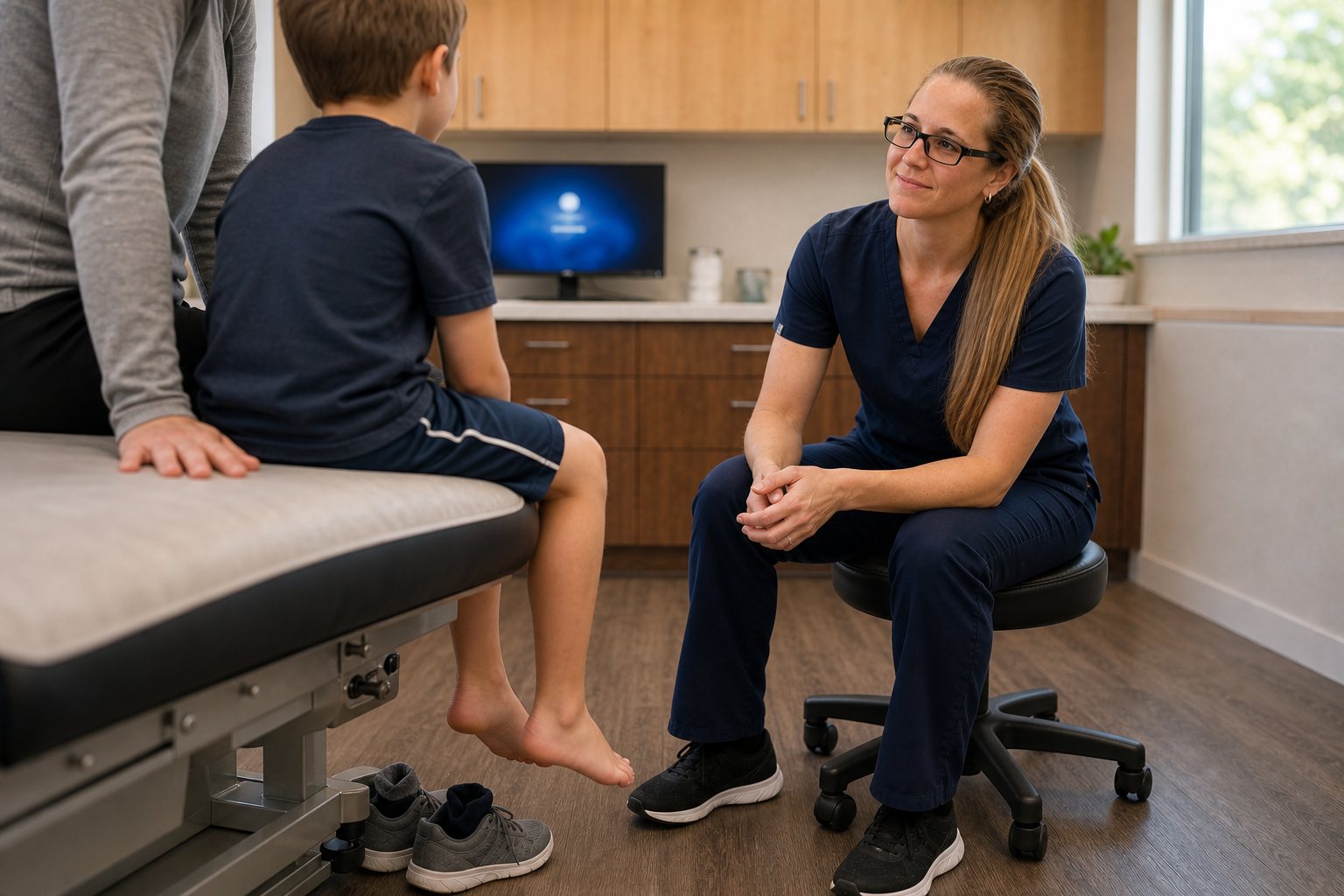
What may be happening
Children’s feet and walking patterns change as they grow. A visible difference in arch shape or alignment may not cause symptoms and may only need observation. Pain, fatigue, limping, repeated tripping, activity avoidance, or persistent shoe difficulty adds a different kind of information.
Heel pain, recurring injuries, nail and skin concerns, or a change that affects play and daily movement can also deserve attention. The evaluation considers the child’s age, development, symptoms, activity, and how the concern has changed over time.
What you may notice
Concerns about walking, alignment, recurring discomfort, footwear, or activity in a child over age three. The timing and location of symptoms are often as useful as the intensity.
A child reports discomfort, asks to stop, tires quickly, or avoids standing and walking activities.
Limping, repeated tripping, an unusual gait, or a noticeable change from the child’s usual movement.
Pulling away from play or sport, difficulty keeping up, or symptoms that consistently follow activity.
Rapid or uneven wear, pressure areas, frequent complaints, or difficulty finding comfortable footwear.
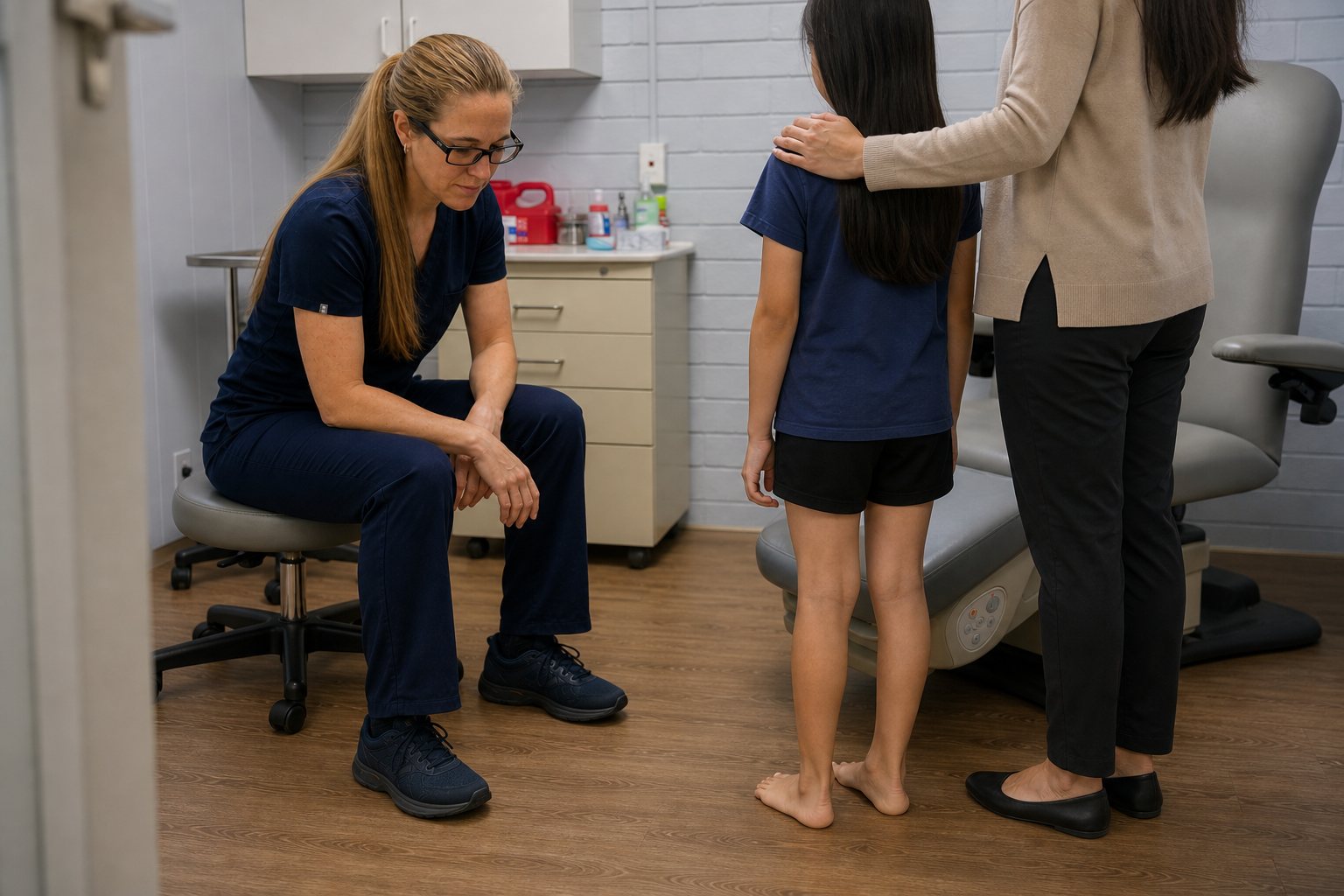
How Dr. Korves may help
The visit begins with what the child and parent have noticed, when it occurs, and whether it affects school, play, sport, or ordinary walking. Previous injuries, development, medical history, and family observations help establish context.
Dr. Korves may observe standing and walking, then examine motion, strength, tenderness, alignment, shoes, and skin or nails as appropriate. The goal is to decide whether reassurance and observation are enough or whether support, treatment, or follow-up may help.
Treatment possibilities
Some concerns need only reassurance and follow-up. When symptoms affect comfort or function, the plan should have a clear purpose and fit the child’s stage of growth and daily life.
Symptom-free or mild findings may be documented and watched as growth and activity change.
Temporary changes in impact, training, rest, or recovery may help when symptoms follow repeated load.
Fit, shoe design, padding, inserts, or another support may be discussed for a defined need.
Condition-specific stretching, strengthening, rehabilitation, or local care may be appropriate.
Advanced options, when appropriate
A surgical discussion may be appropriate for selected persistent, painful, rigid, progressive, or structural concerns after the diagnosis is clear and reasonable conservative options have been considered. Any recommendation should be specific to the child and the condition.
Explore surgical decision-making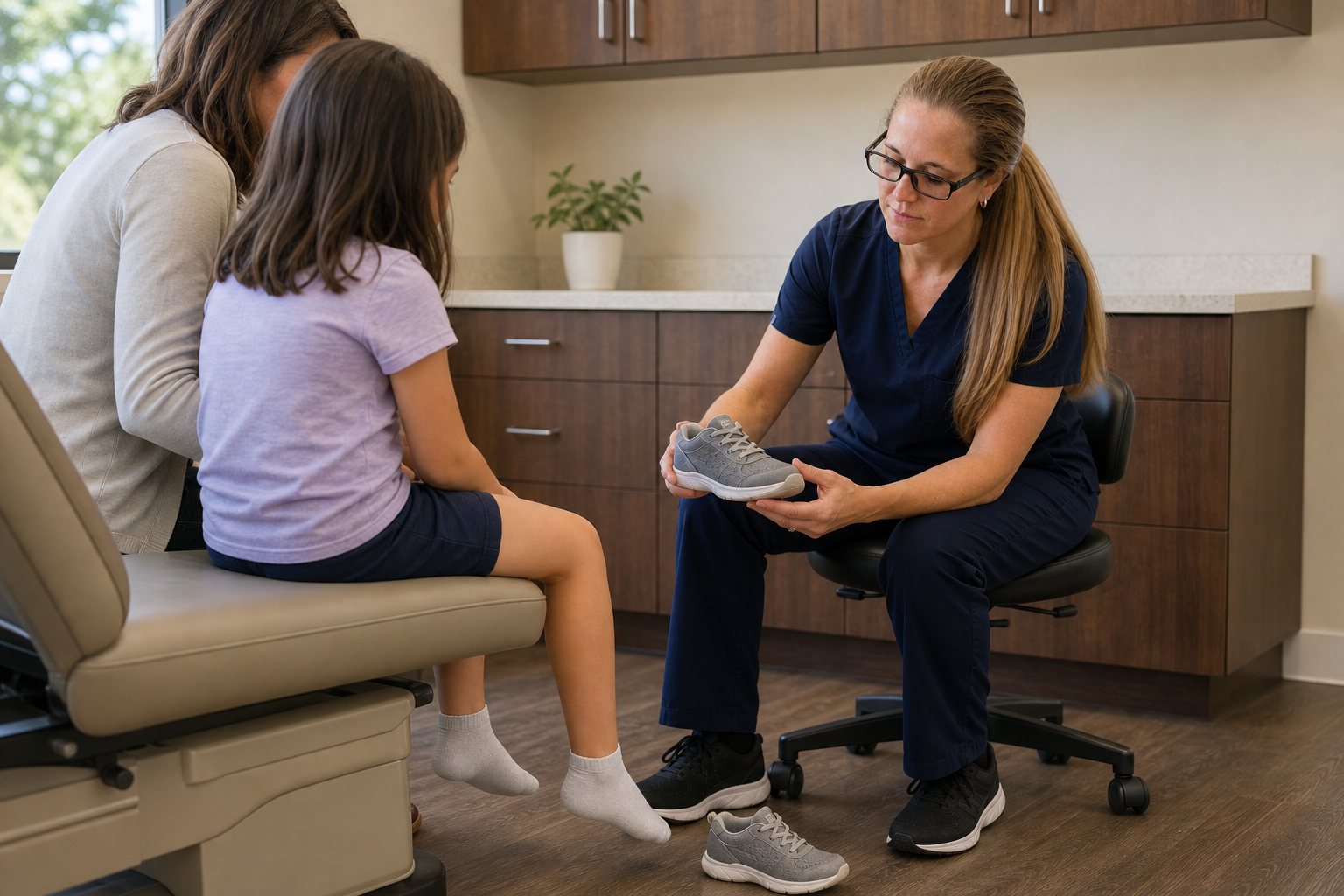
When to be seen
Seek prompt care after a significant injury if the child cannot bear weight, the foot or ankle looks misshapen, or swelling is marked.
Prompt evaluation is also important for rapidly worsening symptoms, spreading redness or warmth, fever, or an open wound.
For your appointment
Is this within the expected range of development?
Does my child need treatment or observation?
Are current shoes or activities contributing?
What changes should prompt reevaluation?
For parents and caregivers
The office can help arrange an evaluation when pain, movement, footwear, or activity raises a question. You do not need to know the medical name first.