A twist or impact
Pain, swelling, bruising, or stiffness after a misstep, fall, collision, landing, or sudden change of direction.
 Ashleigh E. Korves, DPMFoot & Ankle CareESCall707-575-6033
Sports injuries, sprains & fractures
A twist, fall, impact, or training change can leave you unsure what to do next. An evaluation can clarify what was injured, how severe it may be, and what support makes sense.
What may be happening
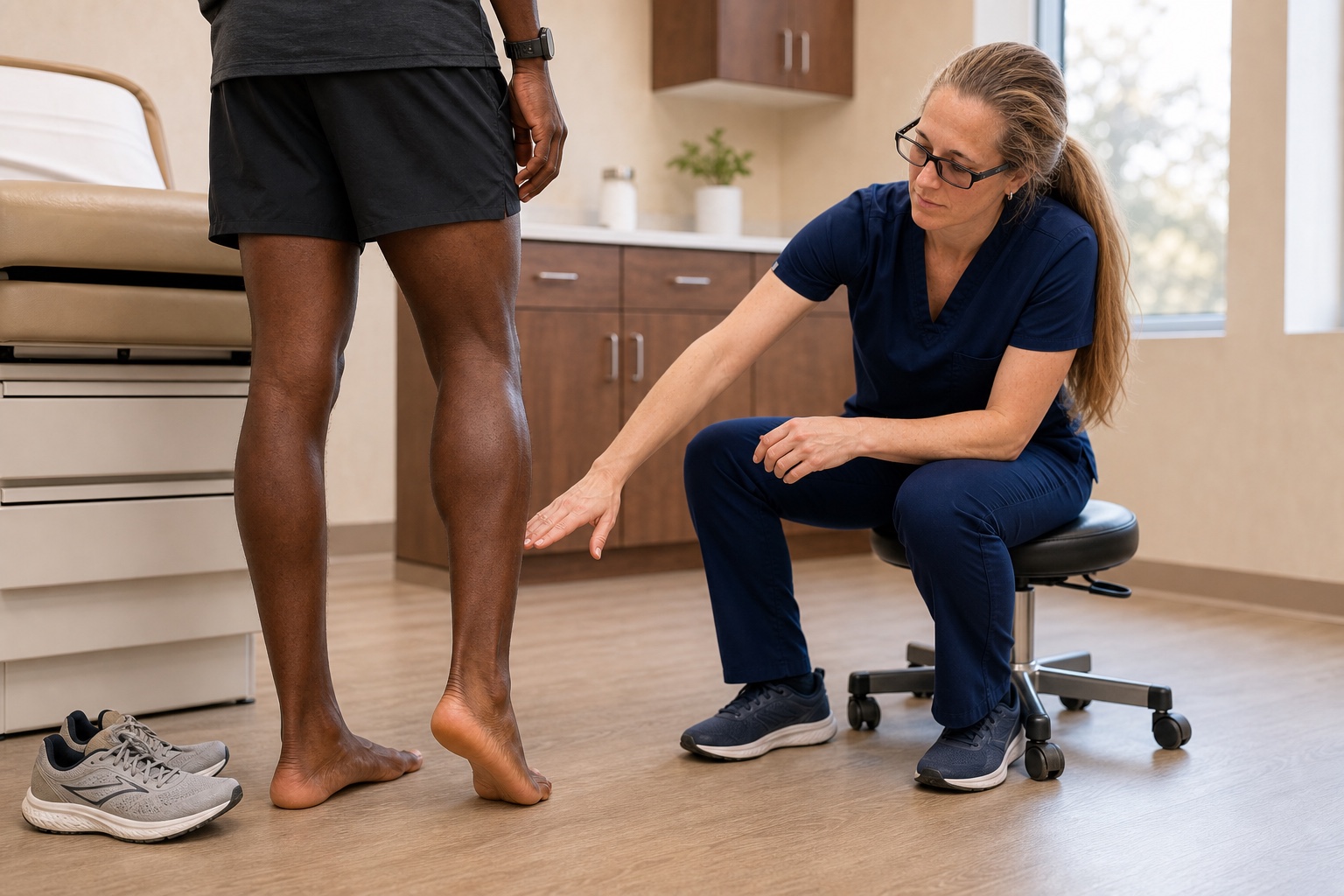
A sudden twist, fall, or direct impact can affect the bones, joints, ligaments, tendons, or muscles of the foot and ankle. A sprain involves a ligament; a fracture involves bone. They can produce overlapping pain, swelling, bruising, stiffness, and difficulty walking. Sometimes they occur together.
Other injuries build through repeated load rather than one memorable moment. A bone stress injury or irritated tendon may begin as focused discomfort during activity, settle with rest, and return as training continues. Where the pain is located, how it began, and whether you can bear weight help shape the evaluation.
What you may notice
Pain, swelling, bruising, or difficulty bearing weight after a twist, fall, impact, or change in activity. The timing and location of symptoms are often as useful as the intensity.
Pain, swelling, bruising, or stiffness after a misstep, fall, collision, landing, or sudden change of direction.
A limp, an ankle that feels unsteady, or trouble standing, pushing off, or walking normally.
Focused discomfort that begins with repeated impact or training, eases with rest, and returns when activity resumes.
Tenderness, swelling, weakness, or instability that is not settling or returns when you resume activity.
How Dr. Korves may help
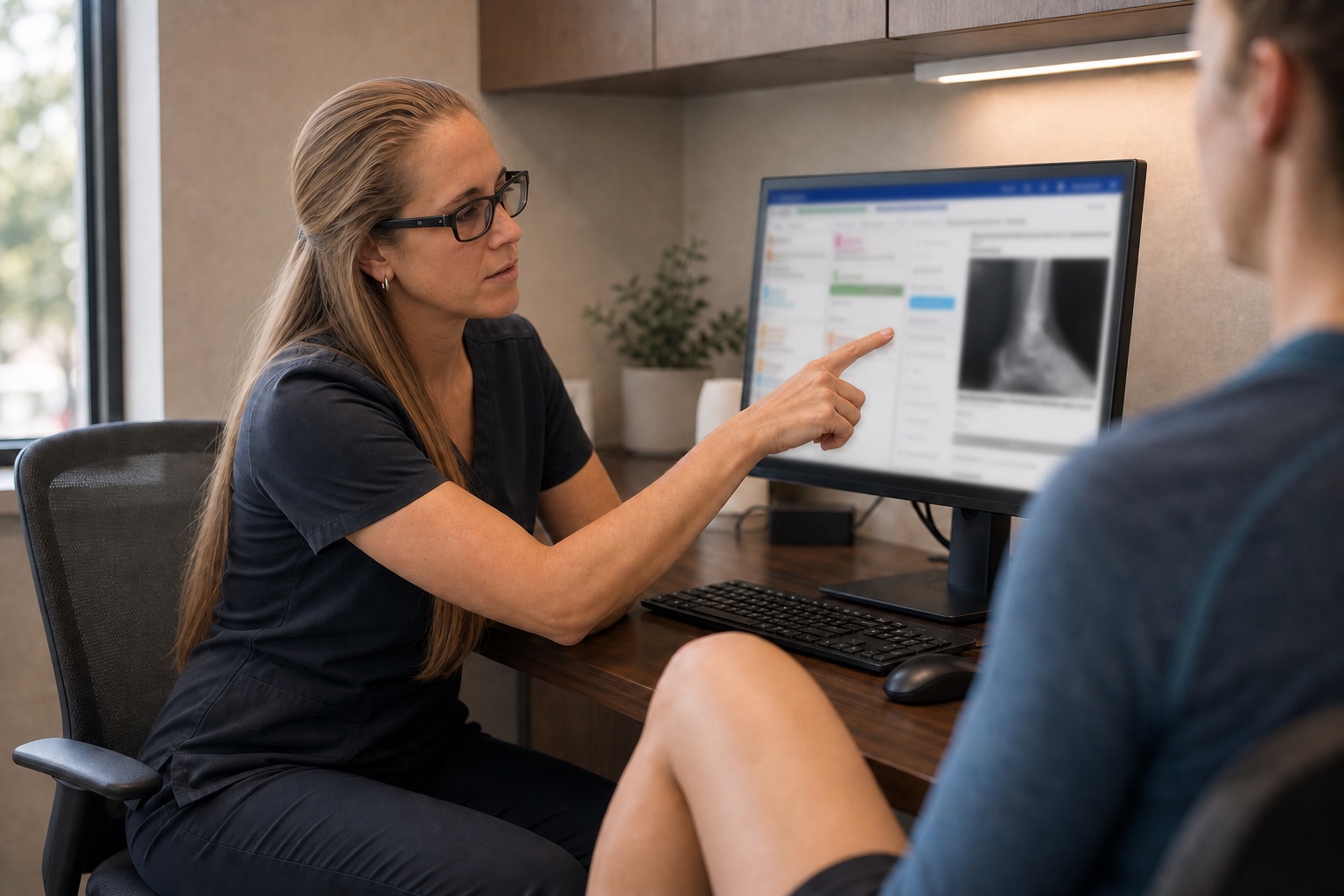
The visit begins with how the injury happened, where the symptoms are located, what you could do immediately afterward, and how the foot or ankle has behaved since. A gradual training-related problem has a different story from a sudden collision or awkward landing.
Dr. Korves may examine tenderness, swelling, motion, strength, stability, circulation, sensation, and walking when it is safe. X-rays may be appropriate when a fracture or joint injury is suspected. Other imaging can be considered selectively when the examination suggests a stress injury or soft-tissue concern that an X-ray may not fully show.
Treatment possibilities
Treatment should match the injured tissue, its severity, and the demands you want to return to. The immediate priority may be protection; the longer plan may include restoring motion, strength, balance, and confidence.
Temporary activity changes and guidance about weight-bearing can reduce further stress while the diagnosis and early response become clearer.
Depending on the injury, a brace, walking boot, cast, supportive shoe, or crutches may be considered to limit motion or unload the area.
Condition-specific rehabilitation or physical therapy may help rebuild motion, strength, balance, and control after the tissue is ready.
A gradual, criteria-based return can test walking, impact, direction changes, and sport-specific demands without treating pain alone as the finish line.
Advanced options, when appropriate
An unstable or displaced fracture, significant ligament or tendon damage, loss of joint alignment, or symptoms that do not improve as expected may require closer imaging and a surgical discussion. Dr. Korves can explain when continued conservative care is reasonable and when operative treatment may be the more appropriate path.
Explore foot & ankle surgery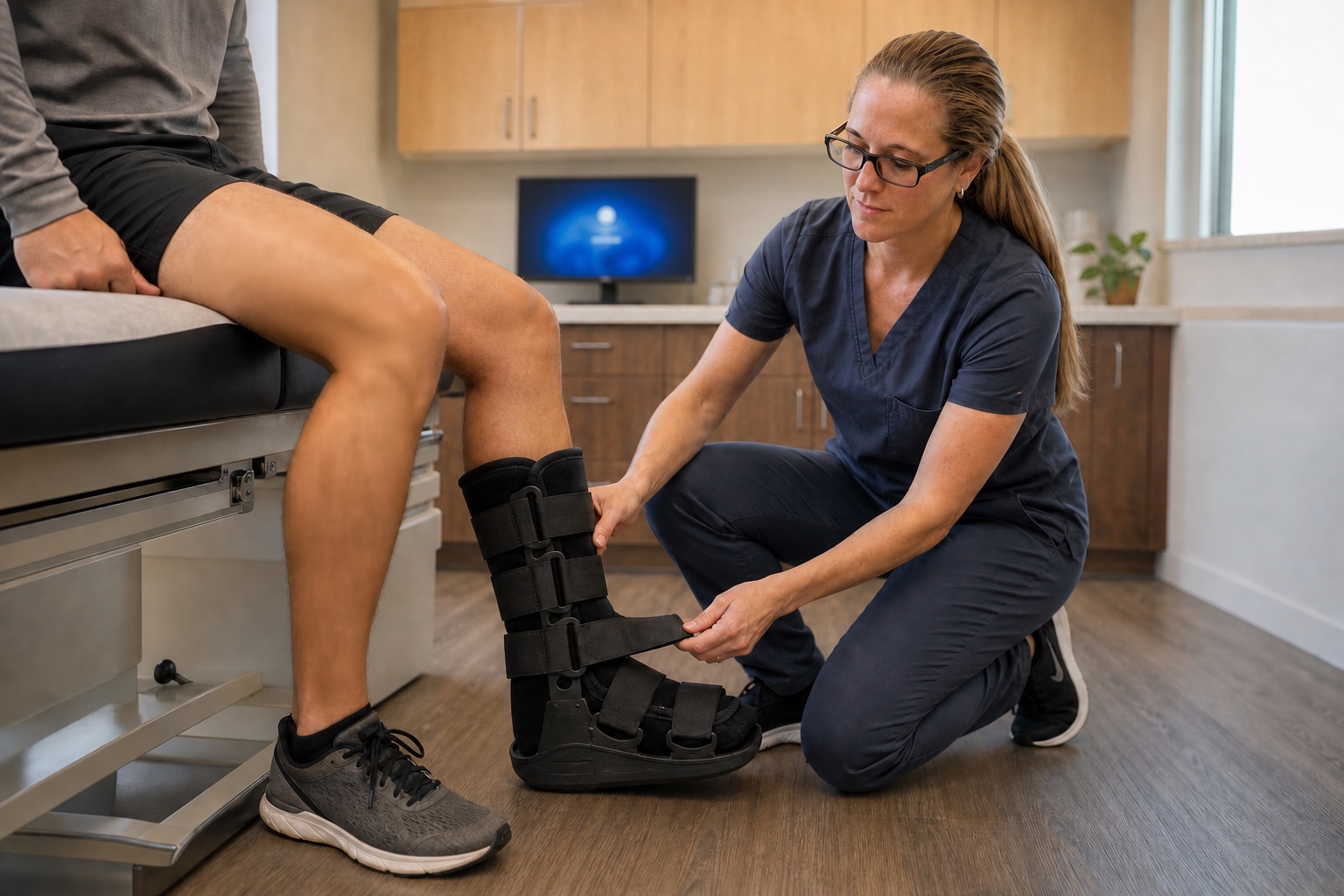
When to be seen
Seek urgent medical care after a significant injury if the foot or ankle looks misshapen, a bone is visible, or there is a large open wound.
Prompt evaluation is also important if you cannot bear weight, or the foot becomes numb, unusually pale or blue, or cold compared with the other side.
For your appointment
Which structure appears to be injured, and how severe is it?
Do I need an X-ray or other imaging now, or only if symptoms persist?
How much weight can I safely place on the foot or ankle, and what support should I use?
What milestones should guide my return to work, exercise, or sport?
Your next step
Tell the office what you are feeling and how it is affecting your day. An evaluation with Dr. Korves can help clarify the cause and the options that fit.